

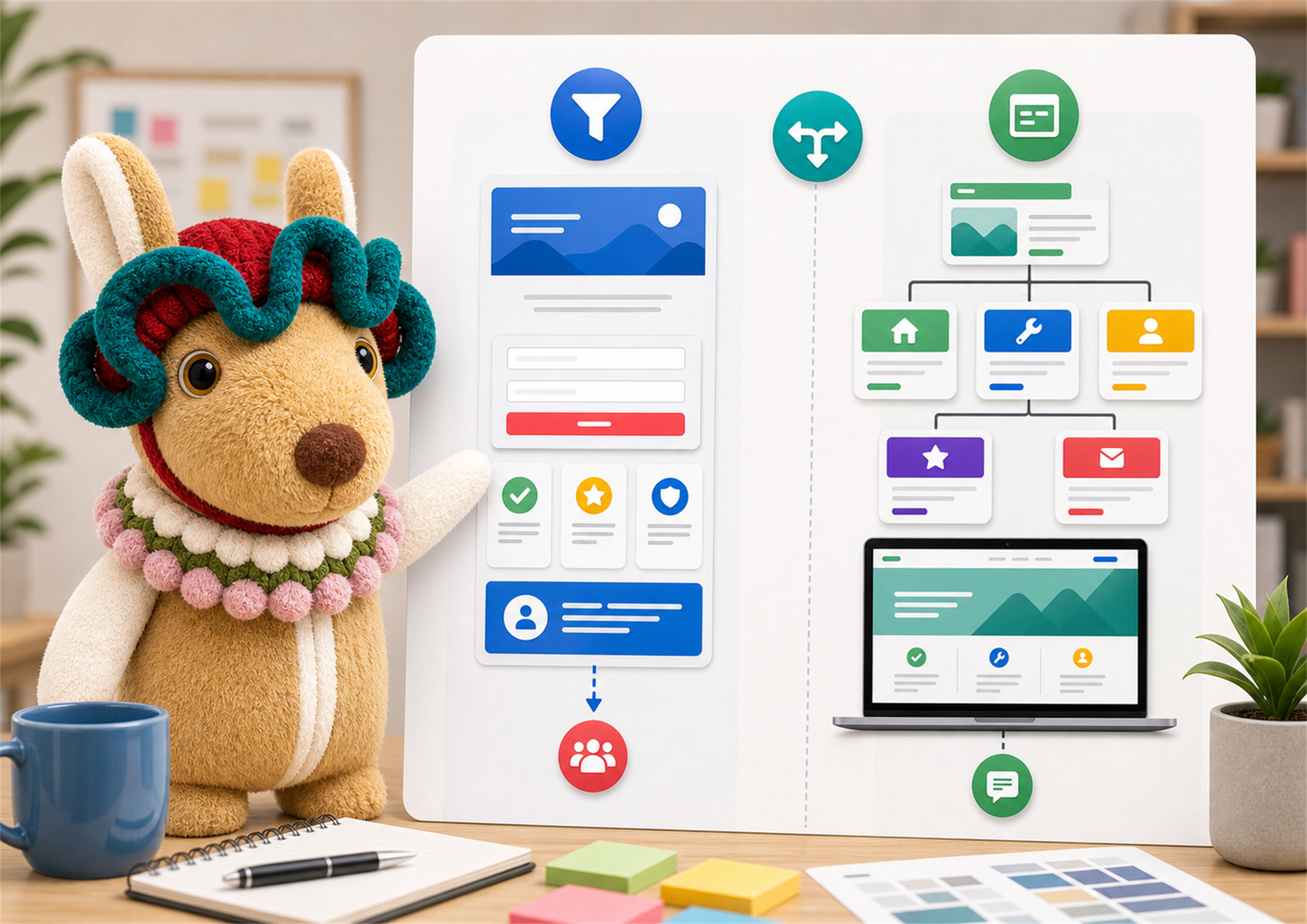
Should your small business build a landing page or a full website first? Here is the practical way to choose the right option for more enquiries.
If you are comparing a landing page vs website, the real question is not which one looks nicer. The better question is: which one will help a stranger understand your offer, trust your business, and send an enquiry faster?
For many small businesses, both can work. A landing page is sharper when you have one offer, one audience, and one action. A website is stronger when people need to compare services, check your background, read details, and return later before deciding.
A landing page is a focused page built around one goal. That goal might be to book a consultation, request a quote, register interest, download a guide, or message your team. A good landing page removes distractions and guides the visitor toward one clear next step.
A website is a larger online home for your business. It usually includes a homepage, service pages, about page, contact page, blog posts, testimonials, and other useful pages. A website gives visitors more paths to understand what you do and why they should trust you.
So the landing page vs website choice depends on the visitor journey. If people already know the offer and only need a push to enquire, a landing page can work well. If people are still comparing options, a website usually gives them more confidence.
A landing page is usually better when you are running a specific campaign. For example, you may be promoting a free consultation, a seasonal package, a new service, a workshop, or a limited offer. In that situation, the visitor should not need to browse ten pages before knowing what to do.
Landing pages are also useful when you want to test an offer quickly. You can launch one focused page, send traffic from ads, social media, email, or WhatsApp, then measure whether people submit the form or click the contact button.
The risk is that a landing page can feel thin if the visitor needs more proof. If the page does not explain your business clearly, visitors may leave and search for a competitor with a stronger website.
A website is usually better when your business needs trust, search visibility, and more explanation. This matters for service businesses where visitors compare experience, pricing logic, service areas, testimonials, FAQs, and examples before contacting you.
A website also gives you more room for SEO. Google’s SEO starter guide explains that SEO helps search engines understand your content and helps users decide whether to visit your site from search. One landing page can rank, but a useful website gives you more pages to answer different customer questions.
If you are building a long-term online presence, a website is usually the stronger base. You can still add landing pages later for campaigns, but your main website keeps working after the campaign ends.
Use a landing page when the visitor has a clear intent and you want one action. Use a website when the visitor may need to explore, compare, and trust you first. This one decision prevents a lot of wasted traffic.
Whether you choose a landing page vs website, the first screen should answer three things quickly: what you offer, who it is for, and what the visitor should do next. If the visitor has to guess, the page is already losing enquiries.
For a landing page, this might be a form or a WhatsApp button. For a website, it can be a contact button, quote request, consultation button, or service enquiry link. The important part is that the action is visible before the visitor scrolls too far.
People rarely enquire just because a page looks modern. They want signals that you are real and capable. Use testimonials, project examples, service details, location information, process steps, FAQs, and clear contact details to reduce doubt.
Many enquiries start from mobile. Forms should be short, buttons should be easy to tap, and important details should not be hidden behind heavy design. The W3C WCAG quick reference is useful when you want to check accessibility basics such as readable content, usable controls, and predictable interaction.
The strongest answer is often not landing page vs website. It is landing page plus website. Your main website builds trust and search presence. Your landing pages support campaigns, ads, seasonal offers, and focused promotions.
A page can get traffic and still fail. Track enquiry form submissions, WhatsApp clicks, phone clicks, email clicks, and qualified leads. The winning page is the one that brings the right enquiries, not just more visitors.
If your business has no proper website yet, start with a lean but complete website. It should explain your offer, show your services, build trust, and make enquiry simple. This gives you a stable base for search, referrals, social media, and repeat visitors.
If you already have a website but you are launching one specific offer, build a landing page. Link it from your ads, social posts, email, or WhatsApp messages, and keep the page focused on that offer.
For example, Webigaroo’s guide on Google Business Profile vs Website explains why small businesses often need more than one online channel. The same logic applies here. A website can be your foundation, while a landing page can be the campaign tool that turns focused traffic into enquiries.
If you want help building that foundation, you can start from Webigaroo’s web design service and keep the structure simple: clear offer, clear proof, clear enquiry path.
| Situation | Better choice | Why |
|---|---|---|
| You have one campaign offer | Landing page | It keeps attention on one action. |
| You need long-term trust and SEO | Website | It gives more room for services, proof, and useful content. |
| You run ads to a specific promotion | Landing page | It can match the ad message closely. |
| Customers need to compare details | Website | It supports browsing, FAQs, examples, and service pages. |
| You want both trust and campaigns | Website plus landing pages | The website builds the base, landing pages support focused offers. |
Use this quick landing page vs website checklist before you spend money on design. If the campaign has one offer, one audience, and one action, a landing page can be enough. If the visitor needs proof, service details, FAQs, and trust signals, a website is the better base.
The safest approach is to treat landing page vs website as a growth decision, not just a design decision. Start with the option that removes the most doubt for your customer.
Usually, yes. A landing page is smaller because it focuses on one offer and one action. A website costs more because it needs more pages, structure, content, and navigation.
A landing page can rank if it is useful, indexable, and answers a real search intent. However, a full website usually gives you more opportunities to build useful pages around different customer questions.
For a specific offer, send ads to a landing page that matches the ad message. For general brand searches or broad service searches, a strong homepage or service page may work better.
In most cases, yes. Landing pages are useful for campaigns, but a website gives your business a permanent place for services, proof, contact details, and search visibility.
If you do not have a proper website, build a lean website first. If you already have a website and want to promote one offer, add a landing page for that campaign.
The practical answer is simple: do not treat landing page vs website as a design argument. Treat it as a customer journey decision. Build the page type that makes it easiest for the right person to understand, trust, and contact your business.