

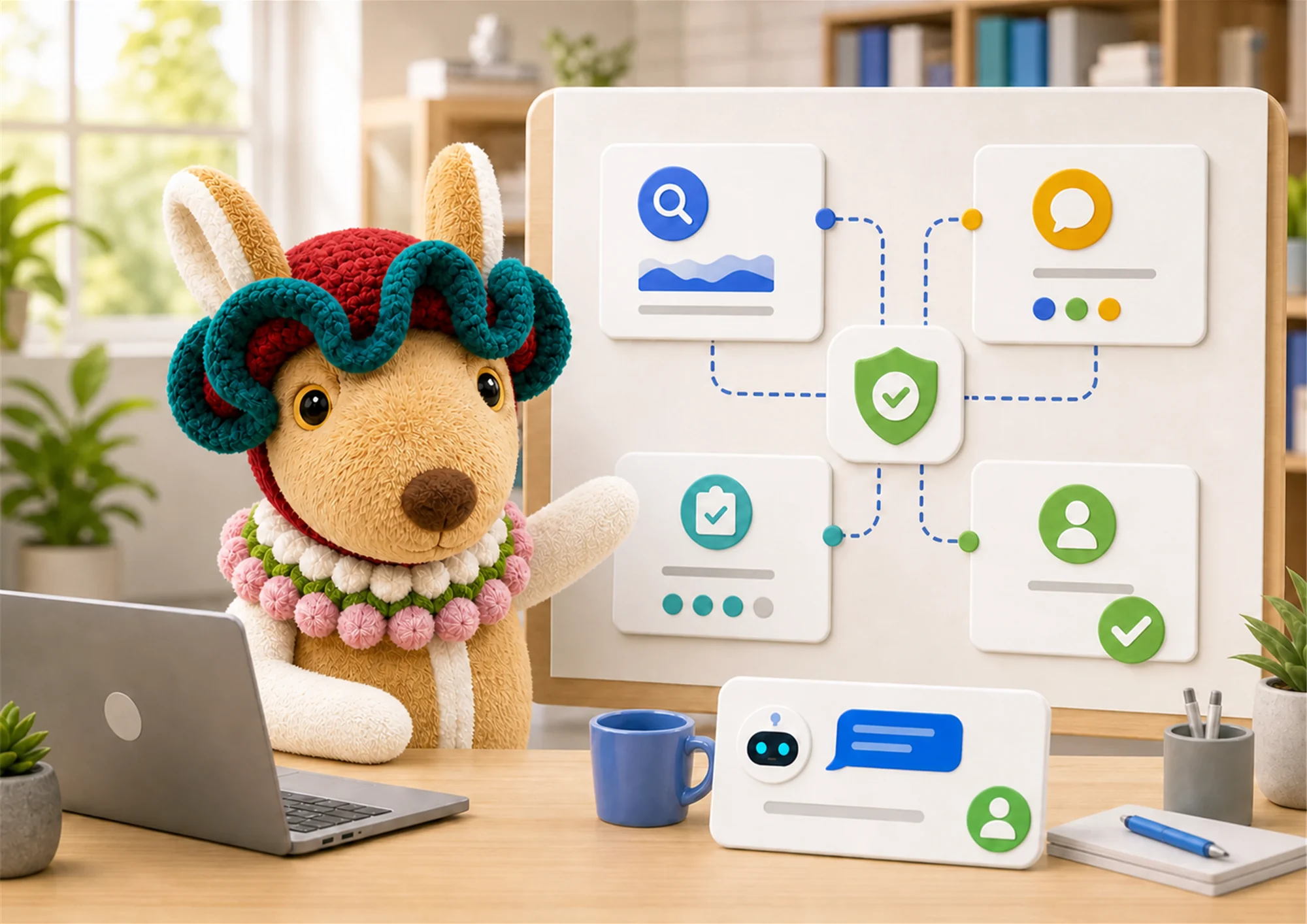
OpenAI reports a shift toward longer agentic work. Here is what a small business should learn before adding AI agents to daily workflows.
AI agents for small business are moving from a future-facing idea into a practical workflow question. OpenAI recently reported that users are increasingly delegating longer, multi-step tasks to agents rather than using AI only for one-off prompts.
The sensible response is not to automate everything. Identify one repeated low-risk task, keep a person accountable, and measure whether the workflow improves a real business result.
On June 25, 2026, OpenAI published research describing a shift from short, self-contained chats toward delegated, multi-step agent work. It reported that non-developer adoption has grown across knowledge work, including marketing, operations, finance, and business functions.
The research is based on OpenAI usage, so it should be read as directional evidence from its own ecosystem rather than a universal benchmark. The practical point is that AI agents for small business can be better suited to bounded workflows than one-off prompts.
An agent can prepare information, use permitted tools, follow a defined process, and return work for review. It still needs a clear job, limited access, current source material, and a responsible person.
Small businesses often lose time in the spaces between tools: reading an enquiry, copying details into a spreadsheet, checking a previous message, drafting a reply, assigning an owner, and preparing a weekly report. These repeated handoffs are more realistic starting points than an attempt to automate an entire business function.
Customer trust must come before novelty. Do not connect an agent to private records, payment actions, or customer messages without suitable permissions and human review. A structured website and contact flow are often the better foundation.
Our WhatsApp website integration guide covers how to make the customer journey clear before adding more automation. A quick response is helpful only when it is accurate, relevant, and easy for a person to take over.
1. Start with one bounded task. Pick a repeated task with a clear result and an easy review step. A weekly enquiry summary, first-draft reply, content outline, or follow-up reminder is safer than handing over an entire customer process.
2. Write the process before automating it. If a team member cannot describe the steps, exceptions, inputs, and approval point, an agent will not make it reliable. Good process notes give AI agents for small business a clearer job and give the owner something to audit.
3. Keep a human approval step. Use automation to prepare, sort, summarise, and suggest. Keep people responsible for final prices, refunds, bookings, sensitive messages, unusual cases, and customer-facing promises.
4. Limit data access. Give each workflow only the data it needs. Review who can use the tool, what it retains, how it logs actions, and whether it can make changes before connecting it to everyday operations.
5. Use approved source material. An agent works better with an up-to-date service list, price policy, FAQ, and enquiry rules. The quality of the underlying business information is usually more important than the novelty of the model.
6. Measure the business result. Track time saved, response quality, mistakes caught, and impact on enquiry speed. If a workflow does not improve a measurable outcome after a fair test, change it or stop it.
7. Keep the website clear first. An agent cannot fix a site that makes people guess what you sell. Start with clear service pages, credible proof, helpful FAQs, and an obvious contact path. See our AI chatbot guide for small business websites.
A practical first test for AI agents for small business is internal preparation. For example, an agent could collect new enquiries from an approved inbox, group them by service, flag missing details, and draft a short summary for a person to review. The person then sends the response and corrects any errors.
This creates a useful feedback loop. You can check whether the summary saves time, whether categories are accurate, and which questions repeat. Then improve your website, form, or service page so that customers provide missing details earlier. That is more dependable than launching a fully autonomous chatbot without a clear operating process.
Expand carefully only after the first workflow proves itself. Add one source of information, permission, or decision rule at a time. Keep a record of what the agent can do. The goal is dependable assistance for a real business process, not an impressive but uncontrolled demo.
It is software that can work through a multi-step task using tools and context with a defined goal and suitable oversight. It is different from asking one chat question.
No. Start by reducing repetitive preparation work and keep a person responsible for customer-facing decisions, approvals, sensitive data, and unusual cases.
Choose one repeated low-risk workflow with a clear before-and-after result, such as preparing a weekly enquiry summary or drafting a first response for review.
AI agents for small business should begin with a workflow the owner can inspect from start to finish. Define the input, the permitted sources, the expected output, and the person who approves it. This makes a result repeatable and makes it easier to spot a mistake before it reaches a customer.
A good first test is also reversible. If the tool fails, a person can complete the task normally. Avoid workflows where an incorrect action changes prices, deletes information, sends commitments, or exposes confidential records. AI agents for small business should earn more responsibility only after they show consistent, reviewed performance.
Ask the team whether the workflow saves useful time and whether it creates better customer information. A process that produces a polished summary but requires long correction work is not an improvement. Use the evidence to revise the instructions, the source information, or the website form that feeds the workflow.
The most reliable benefit comes from combining a clear website, a simple enquiry flow, accurate business information, and human accountability. AI agents for small business can support that system, but they should not become a substitute for a clear offer or responsible service.
For a small company, AI agents for small business should remain accountable tools: keep access narrow, review outputs, and update the workflow when your service information changes.